 Posted by
 Introduction — a small shop, a loud hum, and a stubborn cloud
I remember standing beside a bench where a fresh-finished metal tag came out of a laser machine and thinking: that smell will haunt this shop for years. In one tidy report I read, particle counts near engraving stations were up to 20 times higher than acceptable limits, and many operators reported headaches within a few weeks. The core tool that can change that—laser marking fume extractor—sits quietly on the side, often underrated, sometimes underused.
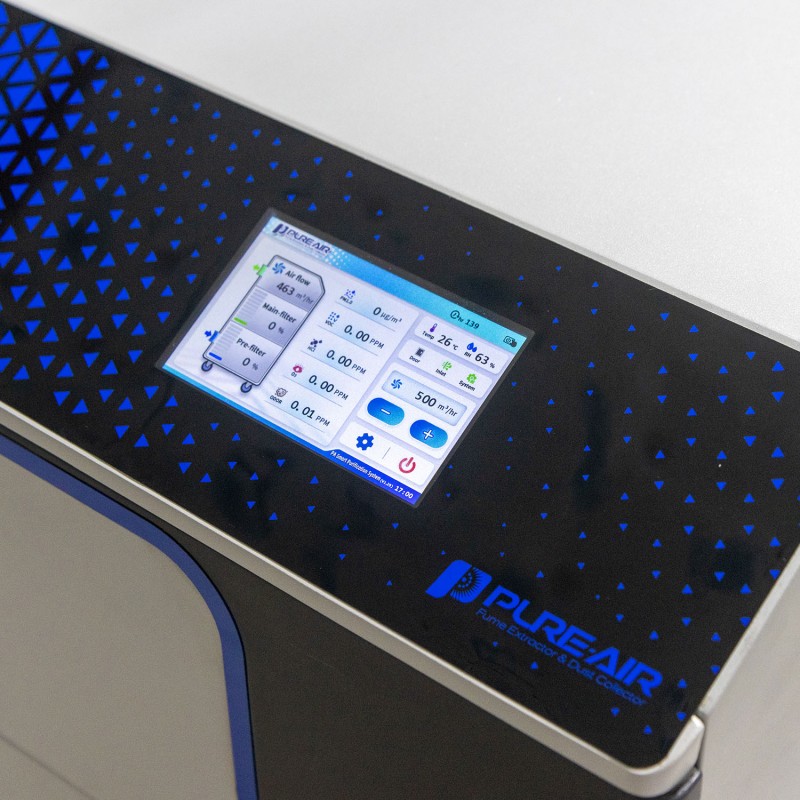
Imagine a tight assembly bay, edge lighting, and a few warning signs nailed to a wall (we all have those). You can feel the work rhythm: focus, speed, repeat. Yet the air carries invisible wear: ultrafine particles and volatile organic compounds that reach lungs and linger. Why do so many shops accept this as part of the day? Why do we delay fixing what we can measure? These are simple questions, but they point to a choice: tolerate the cloud or control it. Next, I’ll show where common fixes fall short and what that costs us—practical, not theoretical.
Part 2 — Why many systems miss the mark (technical diagnosis)
laser marker fume extractor is the right label for the kit on the bench, but not every unit earns its keep. I’ve seen cheap inline fans paired with weak ductwork and a basic mesh filter. Performance? Minimal. Particle capture efficiency drops fast when the fan can’t maintain the designed airflow rate. In short: poor design wings it, and people pay with health and downtime.
What exactly breaks down?
Look, it’s simpler than you think: first, an undersized extraction hood won’t pull fumes at the source. Then, a wrong HEPA filter grade or overloaded activated carbon bed leaves VOCs in the air. Add corrosion in the ductwork and inconsistent power converters driving the fan motor, and you have a system that looks whole but acts hollow. I’m not exaggerating; I’ve replaced systems that had the right parts on paper but failed to address basic airflow dynamics.
Two quick industry terms to anchor this: airflow rate and particle capture efficiency. They matter because you can buy a shiny unit, but if the airflow is insufficient, ultrafine particles escape before the filter can trap them. And yes—maintenance plays a role. Filters loaded with soot are useless. We often treat extraction as a “set-and-forget” thing. That’s the error. — funny how that works, right?
Part 3 — Moving forward: principles and practical metrics
Having seen the missteps, I want to point forward. If you ask me about new technology principles, I’ll boil them down to three ideas: source capture, validated filtration, and smart monitoring. A modern laser marker fume extractor should combine a well-shaped extraction hood, a graded HEPA filter with an activated carbon stage, and sensors that report airflow rate and filter load in real time. That mix makes a system predictable and provable — not just hopeful.
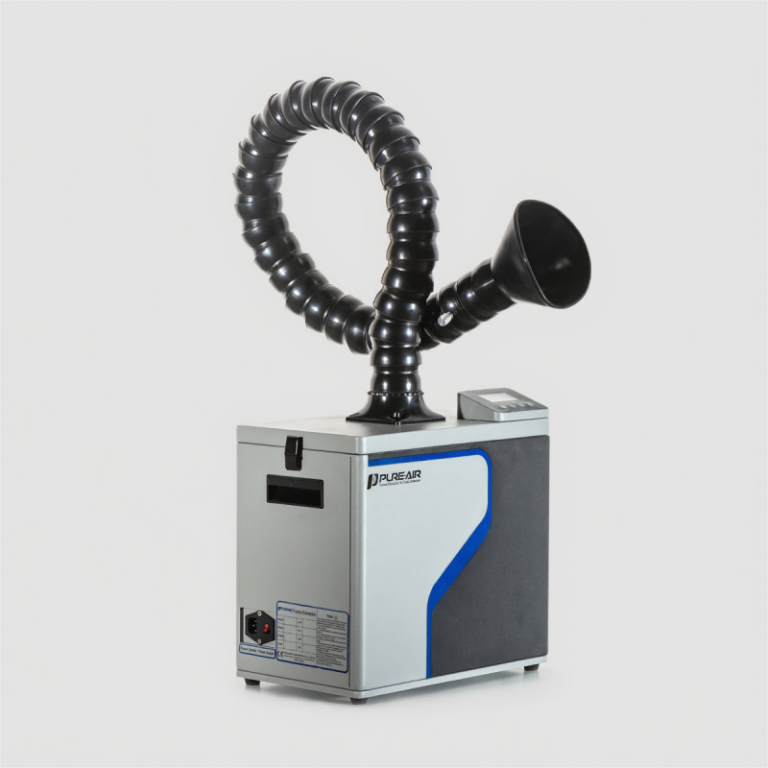
What’s next for shops like yours?
Compare two cases: Shop A kept an old extractor and added a faster fan. Shop B invested in a matched hood-filter-fan system with airflow testing and a simple dashboard. Shop B saw fewer sick days, fewer rejected parts, and measurable drops in airborne VOCs. The soft benefits showed up too—operators felt safer and worked cleaner. I’ve watched morale improve when air quality improves. That says something about human factors in technical choices.
To close, here are three practical metrics I use when advising clients: 1) Verified capture velocity at the hood (measured in feet per minute), 2) Filter stage ratings (HEPA class and carbon weight), and 3) Real-time monitoring for airflow rate and differential pressure. Evaluate systems by these, and you get beyond marketing claims to real outcomes. I’ve used these repeatedly, and they simplify decision-making—trust me, they work.
For reliable systems and sensible service, I often point colleagues toward solutions that respect these principles. And if you want a reference point in the market, consider checking PURE-AIR: PURE-AIR.