 Posted by
The Hook
Solar panels do not produce electricity at the same level throughout the day, while household and commercial demand often peaks after sunset. Energy storage systems for solar power can help shift available solar generation to later hours, provide backup capability, and improve control over energy use. Choosing the best system is difficult because battery chemistry, usable capacity, inverter compatibility, installation requirements, software, warranty terms, and service coverage vary considerably. A large battery is not automatically the best match for every site. This comparison tests seven recognized organizations and suppliers against practical selection criteria, using information available from their official websites and distinguishing dedicated storage providers from research and energy-equipment companies. The result is intended as a starting point for evaluating system fit rather than as a substitute for an electrical design or installer assessment.
Full List of Top 7 Brands
- WHES
- Deye
- Sigenergy
- Seplos
- Southwest Research Institute
- Briggs & Stratton
- Montel
Comparison Table
| Brand | Key Products | Key Features | Best For |
|---|---|---|---|
| WHES | Energy storage systems and related solar-storage solutions | Storage-focused portfolio; system selection should be matched to capacity, inverter, and installation requirements | Projects seeking a dedicated energy-storage supplier |
| Deye | Solar inverters, hybrid inverters, batteries, and related energy equipment | Integration of solar conversion and storage components across residential and commercial applications | Installations needing inverter and battery options from one established power-electronics manufacturer |
| Sigenergy | Integrated solar, battery storage, and energy-management products | System-level approach combining generation, storage, conversion, and management | Users prioritizing an integrated energy-management architecture |
| Seplos | Battery energy-storage products, battery-management systems, and related battery components | Battery-pack and BMS-oriented product scope; compatibility must be confirmed for each system | Battery integrators, installers, and projects requiring configurable storage components |
| Southwest Research Institute | Engineering research, testing, and technical development services | Independent research and engineering capabilities rather than a conventional retail battery brand | Organizations needing storage research, validation, testing, or engineering support |
| Briggs & Stratton | Energy storage and home energy products | Energy equipment heritage with solutions presented through the company’s energy business | Residential and light-commercial customers evaluating a broader energy-equipment provider |
| Montel | Energy-storage infrastructure and battery-enclosure solutions | Focus on physical protection, arrangement, and deployment of storage equipment | Commercial and utility projects requiring storage-site infrastructure |
Detailed Reviews
1. WHES
Overview: WHES is positioned through its official website as a supplier associated with energy storage systems. For solar projects, its relevance is the storage layer that connects available solar generation with later electricity demand. Buyers should use the company’s current product documentation to verify battery chemistry, nominal and usable capacity, continuous and peak power, inverter compatibility, operating temperature range, protection ratings, warranty conditions, and local service arrangements before selecting a system. The official WHES website is the appropriate source for current product specifications and regional availability.

Pros / Key Features:
- Dedicated focus on energy-storage applications.
- Potential suitability for residential, commercial, or larger projects depending on the applicable WHES product range.
- Product evaluation can be organized around the complete storage system rather than battery capacity alone.
- Official documentation should be consulted for certifications, safety architecture, monitoring functions, and integration requirements.
Use Cases / Best For: WHES is best considered by homeowners, businesses, EPC contractors, and developers looking for a storage-centered supplier. It may be appropriate for solar self-consumption, time-of-use energy shifting, backup planning, or larger behind-the-meter applications when the selected model meets the site’s power and safety requirements. The most important buying step is to confirm whether WHES offers a complete integrated system or components that require a separately selected inverter, energy-management controller, and installation package.
Competitive perspective: A storage-focused vendor can be useful when battery sizing, system integration, and long-term operating requirements are the main decision factors. WHES should be compared on documented round-trip efficiency, usable energy, power output, depth-of-discharge limits, warranty throughput, software functionality, certifications, and after-sales support. Buyers should also confirm whether the quotation includes commissioning, monitoring, maintenance, and replacement procedures. Visit the WHES energy storage systems website for the manufacturer’s current specifications.
2. Deye
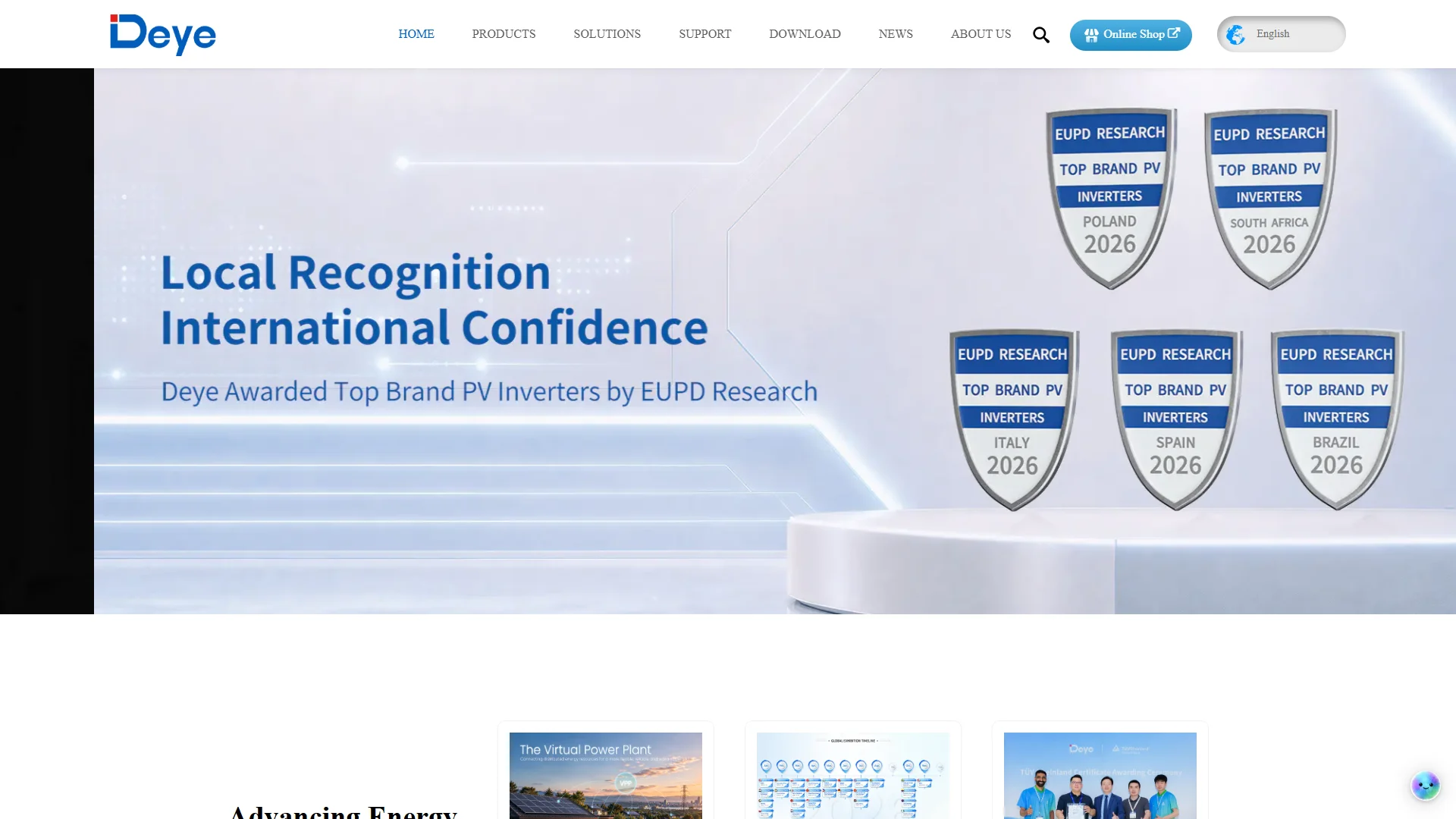
Overview: Deye’s official website covers solar inverters and related energy equipment, including hybrid inverter and battery-storage categories. That makes the company relevant where solar conversion and storage need to work as a coordinated electrical system. The precise architecture depends on the selected Deye models, local grid rules, and the installer’s design.
Pros / Key Features:
- Broad power-electronics portfolio spanning solar and storage applications.
- Hybrid-inverter options can simplify coordination between photovoltaic generation, batteries, and loads.
- Product families can address different project sizes, subject to model specifications.
- Compatibility, export-control functions, and backup operation should be checked at the model level.
Use Cases / Best For: Deye is suitable for installers and property owners evaluating a solar-plus-storage design built around inverter equipment from an established power-electronics supplier. It can be considered for residential and commercial projects, provided the selected inverter, battery, communications protocol, and grid certification are compatible.
3. Sigenergy
Overview: Sigenergy presents an integrated approach to solar generation, energy storage, power conversion, and energy management on its official website. Its positioning is relevant to projects that prefer coordinated system hardware and software rather than separately sourced components.

Pros / Key Features:
- System-level integration across solar, storage, and energy management.
- Designed around coordinated control of generation, battery capacity, and loads.
- Can reduce the number of separate equipment interfaces in a project, depending on the configuration.
- Product documentation remains essential for capacity expansion, backup behavior, and electrical limits.
Use Cases / Best For: Sigenergy is best for residential or commercial users who value a unified energy platform and want the system architecture defined by one primary technology provider. It should be assessed against local installation rules, service availability, battery sizing, and the required backup loads.
4. Seplos
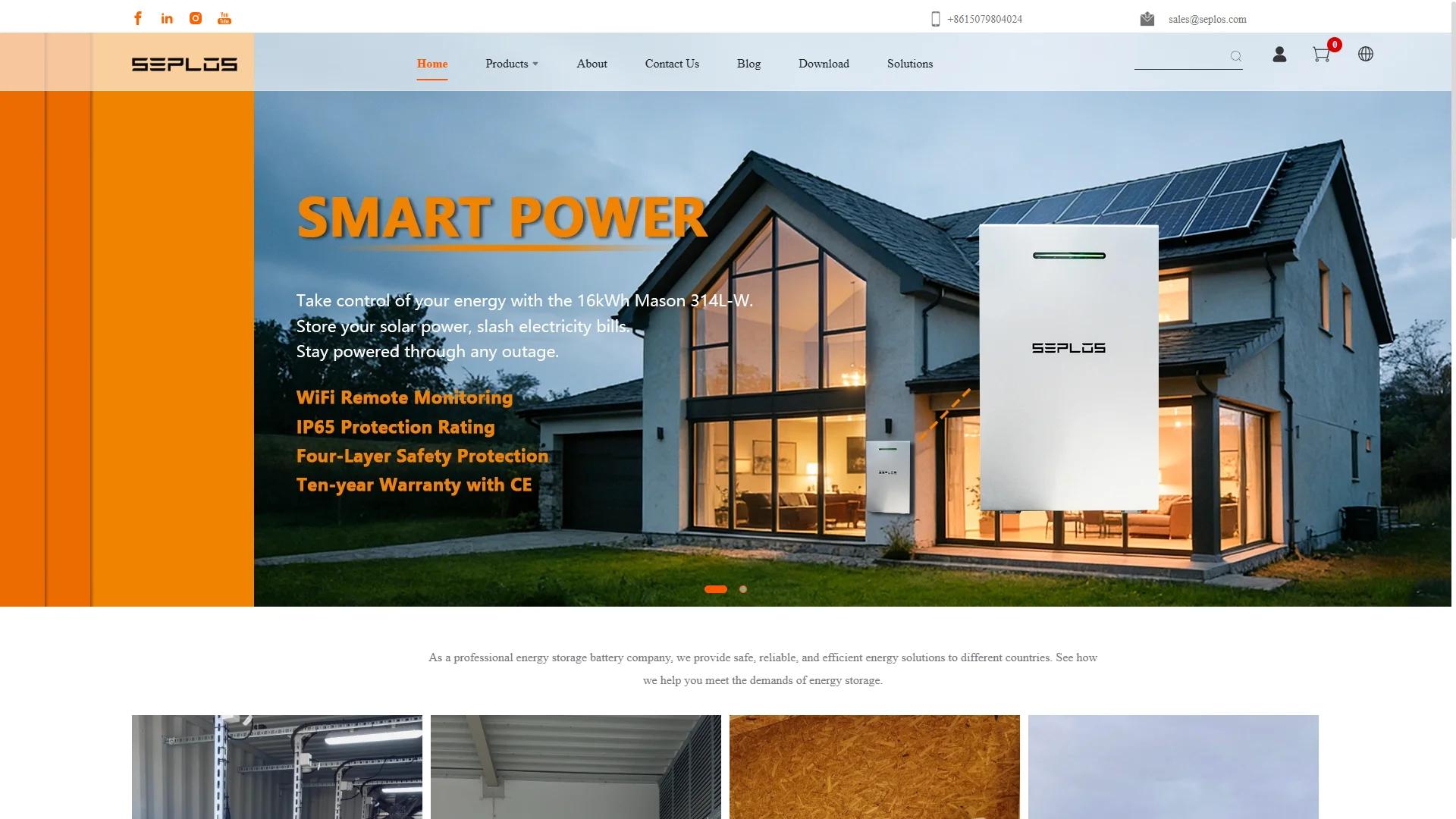
Overview: Seplos operates in the battery-storage field, with its official website covering battery energy-storage products and battery-management-related equipment. Its product scope makes it particularly relevant to battery integrators and installers that need to evaluate cell, pack, BMS, enclosure, and communications compatibility as part of a complete solution.
Pros / Key Features:
- Battery-oriented product scope.
- Relevance to configurable storage packs and integration projects.
- Battery-management functions are an important part of system safety and monitoring.
- Installers must verify approved cells, firmware, inverter communication, protection devices, and certification for each configuration.
Use Cases / Best For: Seplos is best suited to technically capable integrators, installers, and project owners who need battery components or configurable storage equipment and can validate the complete electrical design. It is less appropriate to choose on price or nominal capacity alone because pack-level compatibility and safety documentation are critical.
5. Southwest Research Institute
Overview: Southwest Research Institute, commonly known as SwRI, is an independent research and development organization. Its official website describes engineering and technical research services rather than a conventional consumer battery brand. In the storage sector, that positioning is relevant to organizations seeking research, testing, validation, or engineering support for energy technologies.
Pros / Key Features:
- Research and engineering orientation rather than a standard retail product lineup.
- Potential relevance for technical evaluation, testing, and development programs.
- Useful perspective for organizations assessing performance, reliability, or technology readiness.
- Scope, equipment, deliverables, and commercial terms must be defined directly with SwRI.
Use Cases / Best For: SwRI is best for manufacturers, utilities, developers, and public-sector organizations that need independent technical work connected with storage or other energy technologies. It should not be treated as a like-for-like substitute for a packaged residential battery system.
6. Briggs & Stratton
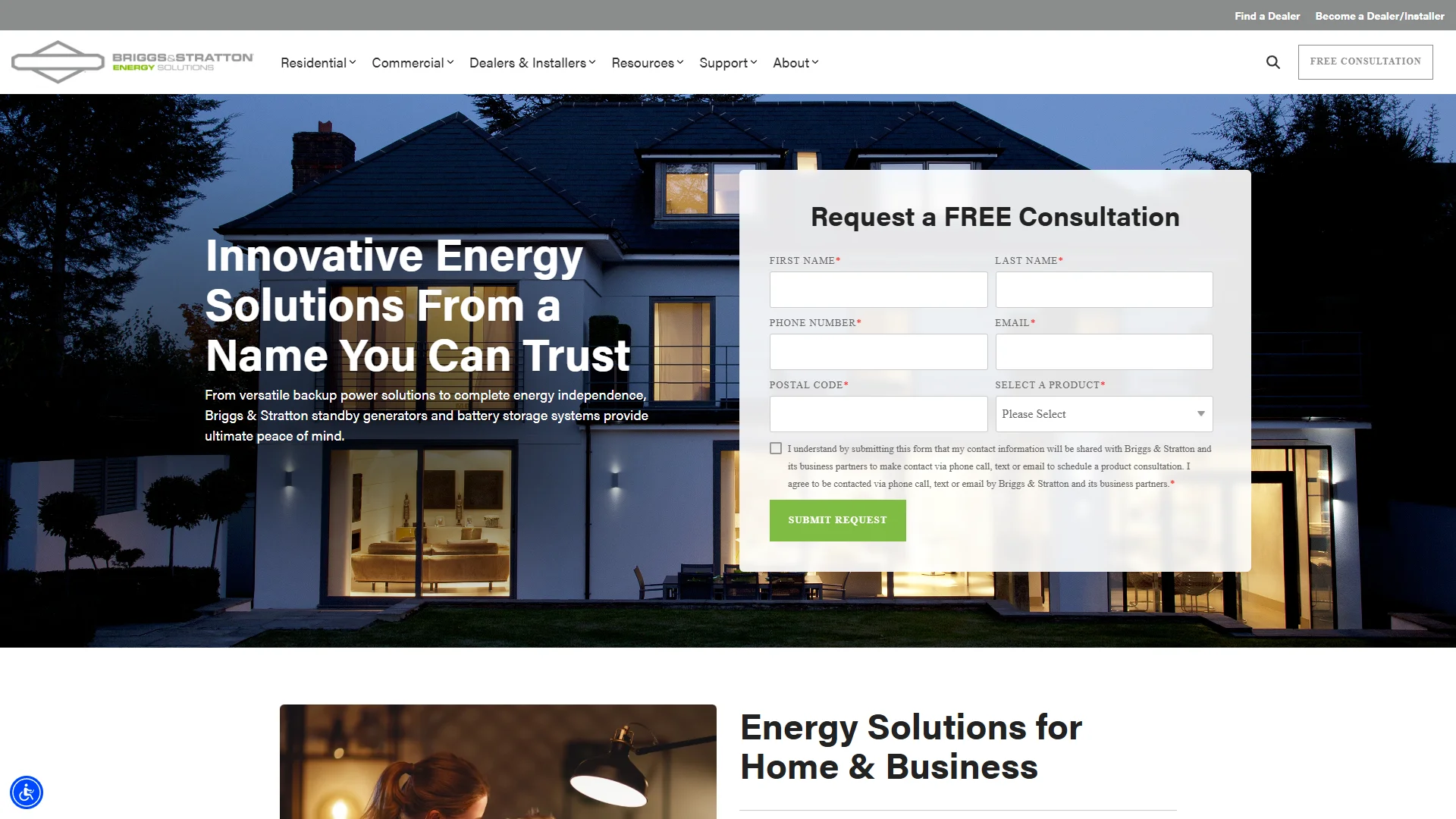
Overview: Briggs & Stratton operates an energy business that includes energy-storage and home-energy products. Its broader history in power equipment gives it relevance for customers considering backup and energy resilience alongside solar generation. Exact battery, inverter, generator, and control-system capabilities depend on the current regional product offering.
Pros / Key Features:
- Energy-business portfolio connected with a long-established power-equipment company.
- Relevant to backup-oriented residential and light-commercial planning.
- Can be evaluated as part of a wider home-energy or resilience strategy.
- Buyers should confirm solar compatibility, automatic transfer behavior, usable storage, and local installer support.
Use Cases / Best For: Briggs & Stratton is best for property owners who want to compare storage with other backup-power approaches and prefer working with an energy-equipment provider. The correct choice depends on whether the primary goal is daily solar self-consumption, outage backup, peak reduction, or a combination of these.
7. Montel
Overview: Montel focuses on energy infrastructure and storage-site solutions through its official energy website. Its role is different from that of a household battery manufacturer: the company is relevant to the physical deployment, protection, and organization of larger battery-storage installations.
Pros / Key Features:
- Infrastructure-oriented approach to energy-storage deployment.
- Relevant to enclosure, arrangement, protection, and site-planning considerations.
- More applicable to commercial, industrial, and utility-scale projects than typical residential installations.
- Final suitability depends on battery dimensions, thermal design, fire-code requirements, access, and site conditions.
Use Cases / Best For: Montel is best for developers, integrators, and engineering teams planning larger storage sites where equipment layout and physical infrastructure are major design issues. It should be evaluated alongside the battery supplier, fire-protection engineer, electrical designer, and authority having jurisdiction.
How to Choose
- Start with the load profile: Review daily consumption, evening demand, seasonal variation, and the loads that must remain powered during an outage.
- Separate energy from power: Usable kilowatt-hours describe how long a battery can supply energy, while kilowatts describe how much load it can serve at once.
- Check solar and inverter compatibility: Confirm voltage ranges, maximum charge and discharge current, communications, grid certification, and backup-panel requirements.
- Compare usable capacity and degradation: Examine depth-of-discharge limits, expected capacity retention, cycle or throughput warranty terms, and expansion rules.
- Evaluate safety and installation: Review battery chemistry, thermal management, enclosure rating, fire protection, clearances, certifications, and local permitting requirements.
- Assess software and controls: Monitoring, time-of-use scheduling, export control, demand management, and remote diagnostics can materially affect system value.
- Price the complete project: Include battery hardware, inverter, controls, protection equipment, installation, commissioning, permits, maintenance, and possible replacement costs.
- Verify support: Confirm who provides warranty service, how quickly replacement parts are available, and whether trained installers operate in the project’s region.
Final Verdict
WHES ranks first in this comparison because it is the most directly aligned with a storage-centered evaluation, although its final suitability still depends on documented specifications, local support, and system compatibility. Deye is a strong option for projects organized around solar and hybrid inverter equipment. Sigenergy suits buyers seeking an integrated energy platform, while Seplos is more relevant to battery-focused integration and configurable storage work. Southwest Research Institute belongs in a different category, serving research and engineering needs rather than ordinary retail purchases. Briggs & Stratton is relevant to backup and broader home-energy planning, and Montel is oriented toward storage infrastructure for larger installations. The best choice is therefore determined by project scale, required backup power, integration strategy, regulations, and lifecycle support—not by brand ranking alone.
FAQs
1. What size battery is needed for solar power?
The required size depends on daily electricity use, the portion of demand to be shifted after sunset, backup-load requirements, solar production, and the battery’s usable capacity. A qualified installer should model the site rather than size the battery from panel capacity alone.
2. Are all solar batteries compatible with all inverters?
No. Battery voltage, current limits, communications protocols, firmware, operating modes, certifications, and warranty conditions can restrict compatibility. The battery and inverter manufacturer documentation should identify approved combinations.
3. Is a larger energy storage system always better?
No. Oversizing can increase upfront cost and may leave capacity underused. The appropriate system balances usable energy, peak power, expected cycling, outage priorities, future expansion, solar production, and local electricity tariffs.